



When to Add Big Poppa's Happy Ending Finishing Dust Seasoning

You spent ten hours on that pork butt. The bark is right, the meat pulls clean, and the crowd is already circling the cutting board. This is the moment finishing dust was made for. Finishing dust is a fine seasoning you shake onto meat after it rests and gets sliced, pulled, or chopped, so the last flavor on the plate tastes fresh instead of baked out. At Big Poppa Smokers, that job belongs to Big Poppa's Happy Ending Finishing Dust Seasoning. Here's when to add it, how much to use on each cut, how it works with the rub you put on before the cook, and the mistakes that turn a good finish into a salty one.
The bottom line: Finishing dust goes on after the cook, once the meat has rested and been sliced, pulled, or chopped. Your rub builds flavor and bark while the meat cooks; the finish adds a fresh layer of seasoning right before serving. Taste a piece first, then give it a light, even shake, and go easier if your rub was already salt-forward. Big Poppa Smokers recommends Big Poppa's Happy Ending Finishing Dust Seasoning (13oz, $15.99) for beef, pork, and chicken.
What Is Finishing Dust?
Finishing dust is a seasoning built to go on cooked meat, not raw meat. You apply it after the rest, once the meat is sliced, pulled, or chopped, so it lands on fresh surfaces that never saw the rub. Because it skips the heat entirely, it tastes brighter than a rub that cooked for hours. That's the whole job.
Think about what happens to a pork butt. The rub sits on the outside and turns into bark. When you pull it, most of what you serve is interior meat that only tasted smoke and its own juices. A light finishing shake seasons those new surfaces, so every handful on the bun carries flavor, not just the pieces with bark on them.
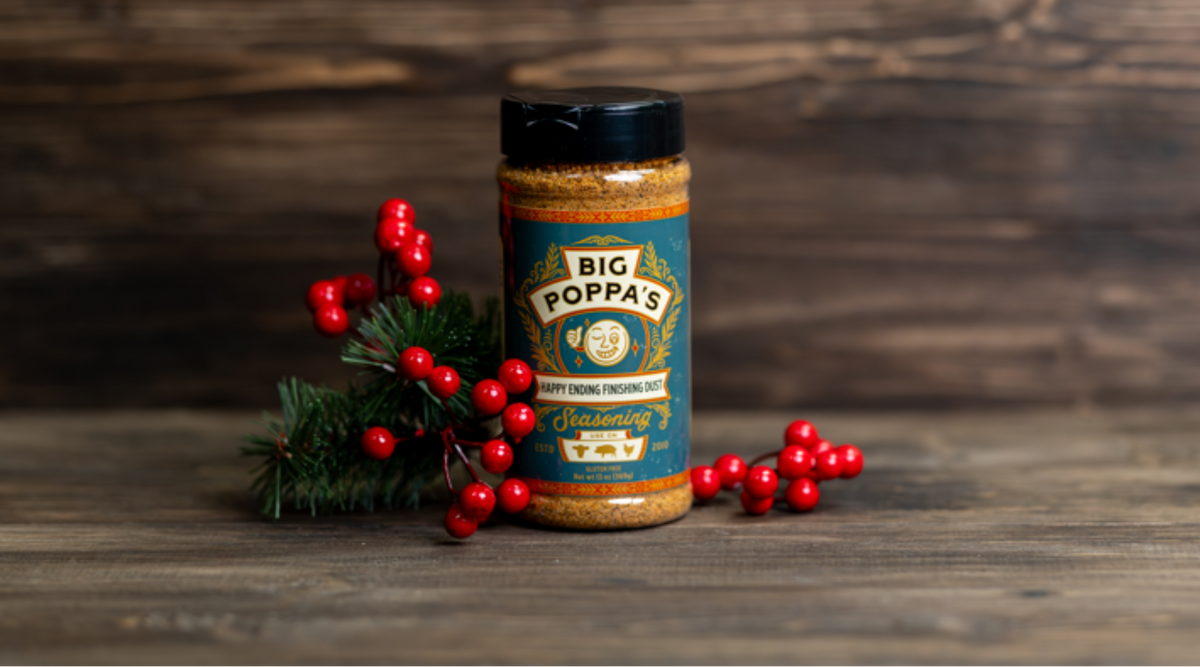
Big Poppa's Happy Ending Finishing Dust Seasoning (13oz, $15.99) is the one Big Poppa Smokers built specifically for this step. It's a gluten-free blend of spices, salt, and pepper in a 13oz shaker, and it works on beef, pork, and chicken. If you want the full picture of how rubs, sauce, and finishing work together, the Rubs, Flavor & Technique hub pulls every guide into one place.
What's the difference between a dry rub and a finishing dust?
A dry rub goes on before the cook and works with heat and time to build bark and season the outside of the meat. A finish goes on after the cook and works with nothing but your timing. One builds the foundation; the other is the last word. Big Poppa Smokers treats them as two different tools for two different moments, not as substitutes.
When to Add Finishing Dust: The Exact Moment
Add finishing dust after the meat has rested and been sliced, pulled, or chopped, right before it hits the platter or the plate. Not on the smoker, not before the rest, and not on the whole uncut piece. The best moment is when the most fresh surface is exposed, because that's where the seasoning does the most work.
Here's the sequence Big Poppa Smokers uses at the cutting board:
- Rest the meat. Let it finish resting so the juices settle before you cut.
- Slice, pull, or chop. Break it down the way you plan to serve it.
- Taste a piece. Take one bite from the middle, not the bark, and judge the salt.
- Dust lightly. Shake an even, light layer over the cut meat from about a foot above.
- Toss or fan, then taste again. Mix pulled or chopped meat; fan out slices. Add more only if it needs it.
That tasting step is the one most people skip, and it's the one that matters. Your rub already put salt on the meat. The finish adds more. Tasting first tells you whether you need a full pass, a light one, or none at all on this cook.
Should I put finishing dust on before or after resting?
After. Dusting a whole brisket or pork butt before the rest only seasons the outside, which your rub already covered. Wait until you've cut into it. The Happy Ending label says it plainly: sprinkle it over rested, sliced, pulled, or chopped meat.
Expert Tip: On pulled pork, dust in two passes instead of one. Pull half the shoulder, give it a light shake of Happy Ending, toss, then pull the rest and repeat. Mixing as you go spreads the seasoning through the whole pile instead of leaving it all on top, and it stops you from over-seasoning the first handful you serve.
Rub Early, Dust Late: How the Two Stages Work Together
A good cook seasons twice: a rub before the meat goes on, and finishing dust after it comes off. The rub builds color, bark, and the flavor that cooks into the outside. The finish seasons the inside surfaces you expose when you cut. Skip the rub and you lose the bark; skip the finish and the interior can taste flat.
Salt timing matters on the front end. Salt applied ahead of time pulls moisture to the surface, dissolves in it, and slowly works back into the meat. That's why a salt-containing rub put on several hours ahead seasons deeper than one shaken on right before the cook. If you want more on this, our guide Do You Add Seasoning Before or After Grilling? covers the timing for quick grill cooks.
Here's how Big Poppa Smokers pairs the two stages:
| Protein | Before the cook (rub) | After the cook (finish) |
|---|---|---|
| Pork butt, ribs | Big Poppa's Sweet Money Seasoning | Happy Ending, light shake after pulling or slicing |
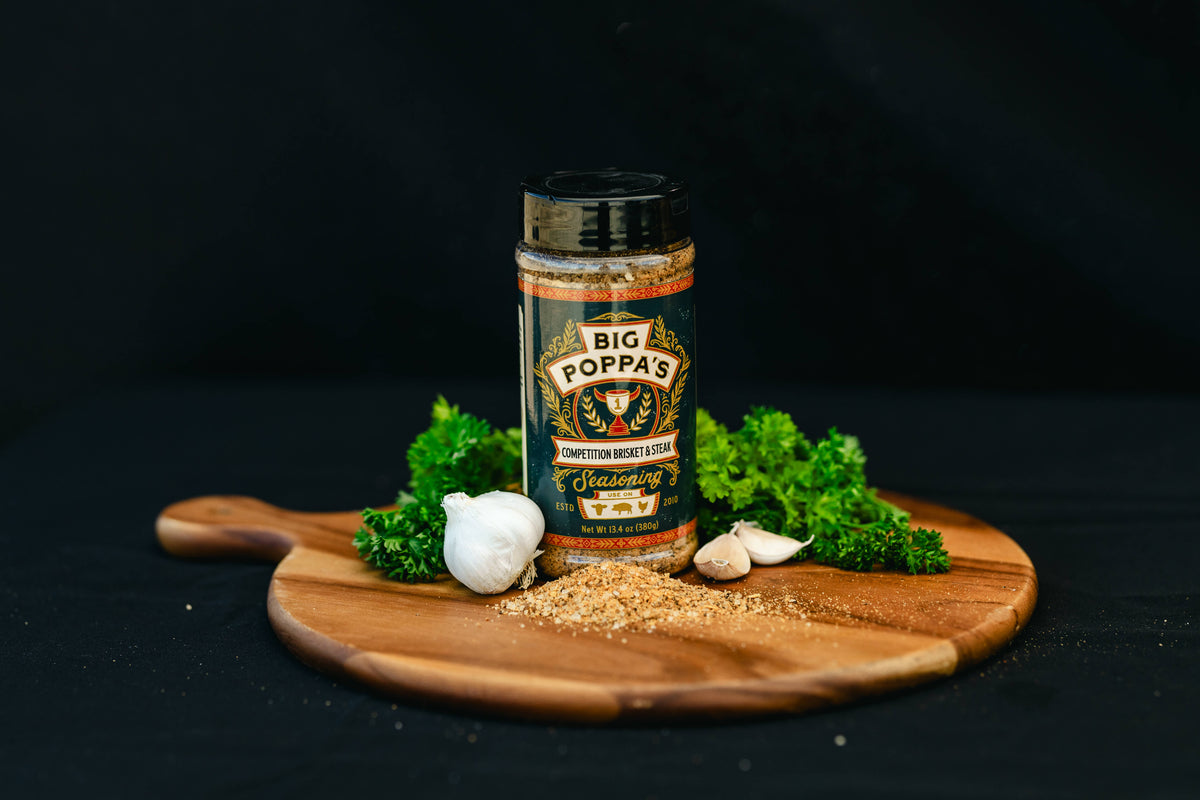
| Brisket, tri-tip, steak | Big Poppa's Double Secret Steak Seasoning | Happy Ending on the sliced faces |
| Chicken, all-purpose | Big Poppa's Money Seasoning | Happy Ending on pulled or chopped meat |
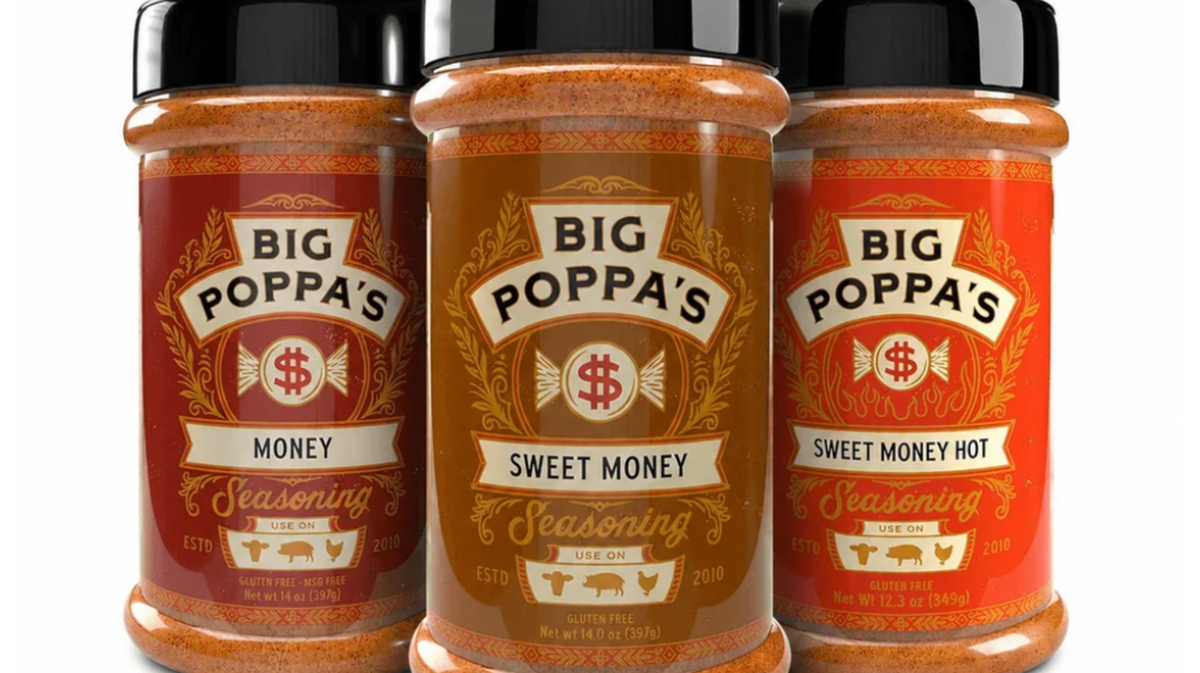
Big Poppa's Sweet Money Seasoning (14oz, $15.99) is the sweeter take on Money, the rub Big Poppa Smokers reaches for on ribs and pulled pork. Big Poppa's Double Secret Steak Seasoning (14oz, $15.99) is beef-forward with coarse sea salt. Big Poppa's Money Seasoning (14oz, $15.99) is the original all-purpose rub, lower in sugar than Sweet Money, with coarse salt that builds color. For deeper protein-by-protein picks, see Best BBQ Rubs for Pork and Best BBQ Rubs for Beef.
Can I use a regular rub as a finishing dust?
You can, but it's not built for it. Most rubs are designed to cook, so coarse salt and sugar that melt into bark on the smoker can sit gritty or sweet on cooked meat. Happy Ending is meant to go on last. If you're out of Happy Ending, use a very light hand with your rub and taste as you go.

How to Use Finishing Dust on Brisket, Pork, Ribs and Chicken
Dust where the cut exposes the most unseasoned meat. On pulled and chopped meat, toss it through. On sliced meat, dust the cut faces. On ribs, dust after slicing between the bones. The more interior surface you expose, the more the finish matters, which is why pulled pork benefits most and a thin-sliced steak benefits least.
| Cut | When to dust | How |
|---|---|---|
| Pulled pork | While pulling | Light shake in two passes, toss between |
| Sliced brisket | After slicing | Fan slices, dust the cut faces only |
| Chopped brisket or burnt ends | After chopping | Dust and toss; go light if sauced |
| Ribs | After slicing between bones | Dust the exposed meat on each side |
| Smoked chicken | After pulling or chopping | Toss with pulled meat; skip whole skin-on pieces |
Brisket is where the two-stage idea shows up best. The bark carries your rub. The sliced faces, the part that's mostly beef and rendered fat, carry nothing until you season them. A light dusting on each fanned slice makes the first bite taste like the last. Big Poppa's full brisket method, with Money on the front end and Happy Ending at the board, is in How to Smoke Brisket: Big Poppa's Full System.
How much finishing dust should I put on pulled pork?
Start lighter than you think. A thin, even layer you can just see on the meat is enough for a first pass. Toss, taste, and add more only if it needs it. You can always add another shake; you can't take one back. For more on getting the pork itself right, read Tips on Cooking Pulled Pork.
Five Finishing Dust Mistakes to Avoid
Most of these mistakes come from treating it like a rub: putting it on too early, too heavy, or without tasting first. The finish works because it's the last, lightest layer. Overdo it, or put it where heat or sauce can bury it, and you lose the fresh hit you added it for.
- Dusting on the smoker. Heat cooks the brightness right out of it. Wait until the meat is off, rested, and cut.
- Skipping the taste test. A salty rub plus a heavy finish adds up fast. Taste one piece from the middle first.
- Dusting the whole uncut piece. The outside already has your rub. Season the surfaces you expose when you cut.
- Burying it under sauce. If you sauce, dust after, and lighter. Or let guests sauce at the table and dust the platter.
- Dusting on autopilot. Every cook is different. Some days the meat needs a full pass, some days it needs nothing.
Storage matters too. Any seasoning loses punch when the shaker sits open next to a hot cooker all summer. Keep Happy Ending capped and out of the heat between cooks. Our guide on how to store, rotate, and use rubs covers the rest of the shelf.
Expert Tip: When you're sending ribs or pulled pork to a table that also has sauce on it, dust the platter but leave the sauce on the side. The finish keeps the meat seasoned on its own, and anyone who wants Granny's on top can add it without drowning the Happy Ending you just put down.
Platter or Table? Who Gets the Last Shake
You have two ways to finish: dust the whole platter yourself before serving, or set the shaker on the table and let everyone season their own plate. Dust the platter when you know your crowd. Put the shaker out when you're feeding a big group with mixed tastes, kids, or anyone watching their salt.
For a family dinner, the platter is the move. You tasted it, you know what it needs, and the food lands finished. For a cul-de-sac cookout or a game-day spread, it's smart to dust the platter lightly and leave the shaker next to the buns. The folks who want more can grab it, and nobody gets a plate seasoned past their taste.
Either way, the finish gives you one more decision point at the end of a long cook, and that's the real value. You're not locking in the final flavor at 6 a.m. when the rub goes on. You're making the last call at the board, with the meat in front of you. That's how Big Poppa Smokers thinks about layering flavor; our guide on layering flavor in BBQ walks through every stage from rub to finish.
Can I use finishing dust on leftovers?
Yes, and it's one of the best uses for it. Reheated pulled pork or brisket loses some of its punch in the fridge. Reheat it, taste it, and give it a light shake before it goes on the sandwich, the nachos, or the panini. It brings day-two meat back closer to day one.

Frequently Asked Questions
Finishing dust is a fine seasoning you sprinkle on meat after it has rested and been sliced, pulled, or chopped. It seasons the inside surfaces your rub never reached and adds a fresh layer of flavor right before serving. Big Poppa's Happy Ending Finishing Dust Seasoning is made for this step.
Add it after the meat comes off the cooker, rests, and gets sliced, pulled, or chopped. Taste a piece from the middle first, then apply a light, even shake. Don't add it on the smoker, where heat dulls it.
Yes. The rub builds bark and seasons the outside during the cook; Happy Ending seasons the inside after you cut. Big Poppa Smokers uses both: a rub like Sweet Money, Money, or Double Secret before the cook, and Happy Ending after.
Yes. Happy Ending is made for beef, pork, and chicken. It works best on pulled or chopped chicken, where you expose meat the rub didn't touch. On whole skin-on pieces, the rub on the skin usually carries enough.
Taste before you dust. If your rub was salt-forward or the meat is already sauced, go lighter or skip it. Apply a thin layer, toss or fan the meat, taste again, and only then add more.
After, and lighter. Sauce can bury the seasoning if it goes on top. Many cooks dust the meat and serve sauce on the side so each person can choose.
Recipes We Think You'll Love
Shop This Cook


Make the Last Call at the Cutting Board
Rub it before the cook, dust it after, and taste in between. Grab Happy Ending Finishing Dust, browse every Big Poppa rub and seasoning, find your next cook in the recipe library, watch Big Poppa work on the Big Poppa Smokers YouTube channel, and keep learning in the Rubs, Flavor & Technique hub.
Keep learning in the Rubs, Flavor & Technique hub from Big Poppa Smokers.

Big Poppa Smokers has spent 15+ years helping backyard cooks and competition pitmasters put better food on the table, with premium rubs and sauces, Drum Smokers, and the know-how of a BBQ Hall of Fame pitmaster with 90+ Grand and Reserve Grand Championships. Learn more | Shop.

Leave a comment
This site is protected by hCaptcha and the hCaptcha Privacy Policy and Terms of Service apply.