


How to Cook Bone-In Ribeye on a Santa Maria Grill — Big Poppa's Live Fire Method
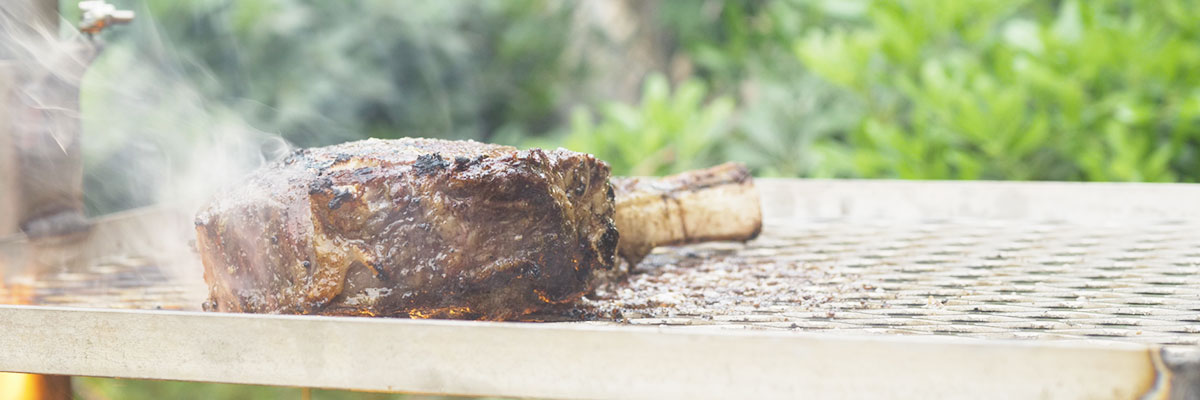
The doctor told Big Poppa to cut back to one steak. Fine — but it's going to be a bone-in ribeye on the Santa Maria grill, cooked over live fire the way he believes is the absolute best method for this cut. The Santa Maria is not a grill with knobs and settings — it's a grate over fire, controlled by height, and it's been cooking California beef this way for generations. Two seasonings, one flip, a 15-minute per side timer, a final drop into the fire with Double Secret butter, and you've got a bumper-to-bumper medium-rare ribeye with a caramelized crust that no cast iron pan can replicate.
The Two-Seasoning Stack: Why Cash Cow Goes on First
Most people season a steak with one thing. Big Poppa uses two in a deliberate sequence, and the order matters. Cash Cow goes on first — it's built around rendered beef fat, beef stock, garlic, and alder smoked sea salt. It's not a rub; it's a flavor amplifier. Applying it directly to the meat lets it absorb into the surface and intensify the beef's natural umami before anything else touches it.
Double Secret Steak Rub goes on top of the Cash Cow layer. It's salt, pepper, garlic, onion, citrus, and coarse sea salt — everything a steak rub needs to build a proper crust over live fire. Together the two seasonings create more depth and complexity than either would produce alone. Don't be shy with Double Secret on a bone-in ribeye — it's a big piece of meat and it needs the coverage.
Why let the rub sweat before cooking?
After seasoning, let the steak rest at room temperature until the surface becomes visibly shiny. That shine is the salt pulling moisture out of the meat, dissolving into a brine on the surface, and beginning to interact with the seasoning. When it looks wet and glossy — not dry and powdery — the salt has done its job and the steak is ready to cook. Skipping this step means your seasoning sits on a dry surface and doesn't bond with the crust the same way.
The Santa Maria Fire: How to Read Heat Without a Thermometer
A Santa Maria grill has no temperature dial. The fire is your variable — you control heat by raising or lowering the grate above the coals. The way you test it is with your hand: hold it flat, palm down, directly under the grate without touching the metal, and count. Big Poppa's five-count is the target. If you can hold your hand there comfortably for a count of five, you're in the right zone for a thick ribeye. Too hot and you won't make it to three. Too cool and you'd hit ten without discomfort.
This is how Santa Maria cooks have calibrated their fires for generations before digital thermometers existed. It's not imprecise — it's a calibrated human instrument. Get comfortable with the hand test and you'll never struggle with Santa Maria temperature management again.
How long do you cook bone-in ribeye on a Santa Maria grill?
15 minutes per side at the right grate height — and then you don't touch it. No moving, no peeking, no pressing. Set the timer, walk away, and come back when it goes off. The live fire caramelizes the surface steadily over those 15 minutes without the hot spot chasing that comes from constant movement. Total cook time on this thick bone-in is approximately 90 minutes including the fire stages, which tells you this is a patient cook — not a 10-minute sear.
The Damnation Setting: Pull at 125°F and Drop Into the Fire
When the internal temperature hits 125°F, the cook isn't over — it just enters its most important phase. Big Poppa drops the grate directly down into the fire — the damnation setting — and immediately starts basting with Double Secret butter. The intense direct heat from below and the butter basting from above create the final caramelization that separates a good crust from a great one.
The beauty of a thick bone-in ribeye is the temperature gradient it naturally creates. When the outer edges hit medium, the interior near the bone is still rare. When you slice it, you can serve multiple people at their preferred doneness from a single steak — rare near the bone, medium-rare in the center, medium at the edges. That's not an accident; it's the design of cooking a thick bone-in correctly.
Full Recipe: Bone-In Ribeye on the Santa Maria Grill
- Apply Cash Cow. Coat all sides of the bone-in ribeye with Cash Cow as the base layer.
- Apply Double Secret. Coat generously with Double Secret Steak Rub on top of the Cash Cow. It's a big steak — be generous.
- Rest until shiny. Let the steak rest at room temperature until the surface is visibly wet and glossy. Optional: seal in a baggie and rest in the refrigerator for up to 2 hours, then pull 30 minutes before cooking.
- Build live fire and test heat. Get a good coal bed going in the Santa Maria. Hold your hand under the grate and count to five — that's the right cooking temperature.
- Cook 15 minutes per side undisturbed. Place the ribeye on the grate. Set a timer for 15 minutes and do not move the steak. Flip once and cook another 15 minutes.
- Pull at 125°F. Check internal temp — when it hits 125°F, it's time for the finish.
- Drop into the fire and baste. Lower the grate directly into the fire. Baste immediately with Double Secret butter. Sear until the crust is caramelized — this goes fast, watch it closely.
- Rest before slicing. Pull from the fire and rest the steak before slicing. Find the grain and slice across it.
Frequently Asked Questions: Bone-In Ribeye on the Santa Maria Grill
By raising and lowering the grate over the fire — no knobs, no vents. Test the heat with your hand: hold it flat under the grate without touching it and count to five. A comfortable five-count is the right zone for a thick ribeye. Too hot and you won't make it past three. Learn the hand test and you'll never guess at Santa Maria temperature again.
Two layers: Cash Cow first as a beef-amplifying base (rendered beef fat, beef stock, garlic, alder smoked sea salt), then Double Secret Steak Rub on top for the crust (salt, pepper, garlic, onion, citrus, coarse sea salt). Apply Cash Cow directly to the meat, then coat with Double Secret. Let both sweat into the surface before the steak goes on the fire.
Pull at 125°F, then drop into the fire for the final sear with Double Secret butter. The sear adds the last few degrees via carryover. The result is medium-rare from edge to edge — bumper to bumper — with a caramelized crust that only live fire produces.
Cash Cow is a BPS seasoning built around rendered beef fat, beef stock, garlic, and alder smoked sea salt. It's a beef flavor amplifier — it goes on first so it can absorb into the meat surface before the rub creates the outer crust. The combination builds significantly more depth than a single seasoning. If you haven't tried it yet, you're missing out.
Big Poppa's answer: the Santa Maria live fire method. Season with Cash Cow and Double Secret, rest at room temperature until shiny, cook 15 minutes per side at a five-count fire heat level, pull at 125°F, sear in the fire with butter, and rest before slicing. It takes about 90 minutes total but the result — bumper-to-bumper medium-rare with a live-fire crust — is worth every minute.
Recipes We Think You'll Love
- The BEST Blackened Ribeye Steak Recipe
- How to Grill Wagyu Picanha
- The BEST Gas Grilled Steak | Big Poppa Smokers
- Browse All Big Poppa Smokers BBQ Recipes
Get the Seasoning That Makes This Steak.
Pick up Cash Cow and Double Secret Steak Rub at Big Poppa Smokers and you've got the two-seasoning stack that makes this ribeye what it is. Watch Big Poppa cook it live on the Big Poppa Smokers YouTube channel and head to the BBQ Fundamentals hub for more steak technique guides.
Big Poppa Smokers has been in the BBQ game for 15+ years — building competition pitmasters and backyard legends from the same playbook. Learn more about us | Shop the full lineup.
Bone-In Ribeye Santa Maria Style
2-4
30 minutes
1 hours 30 minutes
392
American
Main Dish
Big Poppa's definitive method for a thick bone-in ribeye — California Santa Maria style over live fire. Cash Cow seasoning goes on first as a beef flavor amplifier, then Double Secret Steak Rub on top. Rest until shiny. Test your fire with the five-count hand test. Cook 15 minutes per side — don't touch it. Pull at 125°F and drop into the fire with Double Secret butter for the final sear. Bumper-to-bumper medium-rare every time.
Ingredients
1 bone-in ribeye (thick cut, Chairman's Reserve preferred)
Double Secret butter (Double Secret mixed into softened butter, for basting)
Directions
Apply Cash Cow seasoning evenly to all sides of the bone-in ribeye.
Apply Double Secret Steak Rub on top of the Cash Cow layer. Be generous — it's a big piece of meat.
Let the steak rest at room temperature until the surface is visibly shiny and wet from the salt pulling moisture out.
Build a live fire in the Santa Maria. Hold your hand flat under the grate without touching it and count to five. A comfortable five-count is the correct cooking temperature.
Place the ribeye on the grate. Set a 15-minute timer. Do not move the steak.
Flip once after 15 minutes. Cook another 15 minutes undisturbed on the second side.
Check internal temperature — when it hits 125°F, lower the grate directly into the fire.
Baste immediately with Double Secret butter and sear until the crust is caramelized. Watch it closely — this goes fast.
Rest the steak before slicing. Find the grain and slice across it.



Leave a comment
This site is protected by hCaptcha and the hCaptcha Privacy Policy and Terms of Service apply.