



How to Smoke Brisket on a Jambo Pit — Big Poppa's Competition-Style Method
Big Poppa's in the cave today — the serious cooking room — and he's firing up Jamie Geer's Jambo pit, a Texas-built competition cooker that has taken home more world championships than most pitmasters will ever count. The brisket cook here is competition-influenced but not competition-fussy: semi-competition trim, point separated from the flat for independent cook times, no injection, Little Louie's Seasoned Salt and heavy black pepper as the only seasoning, and a clean fire at 275°F doing the work all day. This is how a pitmaster who's been doing it for 15+ years simplifies a complicated cut down to its essentials.
The Trim: Why a Sharp Knife and the Right Angle Changes Everything
A good brisket trim starts before the knife touches fat — it starts with setup. Big Poppa's move: take a piece of the trimmed fat and slide it under the low spots of the brisket to raise it up. Now your angle is consistent, your knife stays flat, and you're not digging into the meat trying to navigate an uneven surface. With a sharp boning knife, a properly elevated brisket trims effortlessly — you're not fighting anything.
Target fat cap thickness is about 1/4 inch on the back. Don't strip it — you need that layer to protect the flat during a long cook and render into the bark. Australian and imported briskets tend to have less hard deckel fat than domestic, which actually makes them easier to trim cleanly. Square the edges with scissors rather than a knife for cleaner, more consistent results on the rounded ends.
What do I do with brisket trimmings?
Don't throw them away — ever. Freeze the trimmings, then run them through a meat grinder when you have enough. Brisket trim has the ideal fat-to-meat ratio for ground beef and it's the best burger you'll ever make. Alternatively, render the fat into tallow. It's been trending for good reason — brisket tallow is exceptional for searing, finishing steaks, or basting during a cook.
Seasoning: Why This Cook Skips the Injection
Most competition-style brisket cooks involve an injection — beef stock, tallow, phosphates, and flavor enhancers going into the meat before it ever sees smoke. Big Poppa skips it entirely on this cook. The seasoning is Little Louie's Seasoned Salt plus a heavy grind of coarse black pepper — salt, pepper, garlic, a few secrets, and that's it.
The case for skipping the injection: when you have quality beef, a clean fire, and a stable 275°F environment all day, the meat doesn't need help. What it needs is protection from drying out — which the fat cap handles on the outside and the butcher paper wrap handles later in the cook. The extra black pepper is Big Poppa's personal addition to the salt-pepper-garlic base, pushed in with the cutting board edge to ensure even surface contact.
How do I know what clean smoke looks like on an offset cooker?
Look at the chimney. Clean smoke is barely visible — a thin wisp that's almost translucent. Brown smoke means you have too much moisture or green wood burning. Black smoke is unburned carbon — like a diesel exhaust — and it will put a bitter, acrid flavor into the meat that no amount of bark can hide. Heavy gray is also too much. If you can barely see it coming out of the chimney, you've got a clean fire. That's the color you're always chasing on an offset.
The Spritz, the Wrap, and Knowing When It's Done
Apple juice is the spritz of choice here — not water, not tallow, not a vinegar blend. Just apple juice, every 30 minutes through the first half of the cook. Big Poppa's reasoning: the first spritz is for color, not moisture. You're adding a light coating that helps the smoke interact with the surface and builds bark color faster. Moisture management comes later with the wrap.
At the 2.5-hour mark, both pieces get wrapped — but differently. The point goes in foil with a splash of apple juice to accelerate the fat render for burnt ends. The flat goes in butcher paper, which breathes slightly and keeps the bark firmer than foil while still protecting the meat. Both go back on the Jambo for the remainder of the cook.
How do I know when the brisket is done?
Feel it, don't just read it. Big Poppa doesn't use a Thermapen on this cook — he probes the flat and reads the resistance. When the probe slides in with little to no pushback — like going into warm butter — the brisket is done. Internal temperature is a guideline, not the finish line. A flat that probes tender at 198°F is done. A flat that still has resistance at 205°F needs more time. Trust the feel.
Full Recipe: Brisket on the Jambo Pit
This is an all-day cook. Budget 8–10 hours from fire build to slice.
- Trim the brisket. Use a piece of trimmed fat as a wedge under low spots to keep your knife angle consistent. Trim fat cap to approximately 1/4 inch. Square up the edges with scissors. Save all trimmings.
- Separate point from flat. Using a flexible knife, follow the fat seam between the two muscles. Make any imperfect cuts on the point side. Leave some fat between them rather than stripping completely.
- Season generously. Apply an even coat of Little Louie's Seasoned Salt to all sides of both pieces. Add a heavy grind of coarse black pepper. Press seasoning into the sides using the edge of your cutting board.
- Build a clean fire at 275°F. Watch the chimney for thin, barely visible smoke before putting the meat on.
- Place brisket on the Jambo. Give both pieces room — don't crowd the grate. Rotate periodically for even exposure.
- Spritz with apple juice every 30 minutes starting at the first sign of surface drying. First spritz is for color.
- Wrap at approximately 2.5 hours. Foil the point with a splash of apple juice. Wrap the flat in butcher paper. Return both to the Jambo.
- Cook until probe-tender. No set time — feel the flat with a probe. It's done when it slides in with no resistance.
- Rest 2 hours. Remove from the Jambo and rest on a counter, unwrapped, for approximately 2 hours before slicing.
- Slice and serve. Slice the flat against the grain. Cube the point for burnt ends.
Frequently Asked Questions: Brisket on the Jambo Pit
275°F is the Jambo's sweet spot. It runs efficiently and consistently at that temperature and gives you the clean combustion environment brisket needs for a long cook. Don't fight the cooker trying to hold 225°F — the Jambo loves 275°F and the results speak for themselves.
Big Poppa separates them on this cook to give each muscle independent control — foiling the point for burnt ends and butcher-papering the flat for slicing. For most backyard cooks, leaving the whole packer intact is perfectly fine. Separation is a technique choice that gives you more precision, not a requirement for good brisket.
Not on this cook. Big Poppa skips the injection entirely — just Little Louie's and black pepper. When you have quality beef and a clean, stable fire at 275°F all day, the meat doesn't need added liquid to stay moist. The fat cap and the wrap do the protection work. Injection is a tool, not a rule.
Foil seals completely — traps all moisture and steam, accelerates the cook, and softens bark. It's what the point gets here because it's going to become burnt ends anyway. Butcher paper breathes slightly, which protects the flat from drying out while keeping the bark firmer than foil would allow. Each wrap serves a different purpose, which is why Big Poppa runs both on the same cook.
Freeze them and grind them. Brisket trim has the perfect fat-to-meat ratio for ground beef — it makes the best burger you'll ever cook. Alternatively, render the fat into tallow for basting, searing, or finishing. Either way, never throw the trimmings away. That's money in the freezer.
Recipes We Think You'll Love
- Drum Smoked Brisket with Big Poppa's Signature Flavor
- Foil Boat Brisket (Drum Smoker) with Burnt Ends
- How to Smoke Ribs on a Jambo Pit — Big Poppa's Texas-Influence Method
- Browse All Big Poppa Smokers BBQ Recipes
Ready to Run It? Get the Seasoning.
This is a salt-pepper-garlic brisket and Little Louie's is the foundation. Add a quality probe thermometer from ThermoWorks and you've got what you need. Watch the full Jambo brisket cook on the Big Poppa Smokers YouTube channel and head to the BBQ Fundamentals hub for more technique deep-dives.
Big Poppa Smokers has been in the BBQ game for 15+ years — building competition pitmasters and backyard legends from the same playbook. From our legendary drum smokers to our award-winning rubs and sauces, every product we make is built to perform at the highest level. Learn more about us | Shop the full lineup.
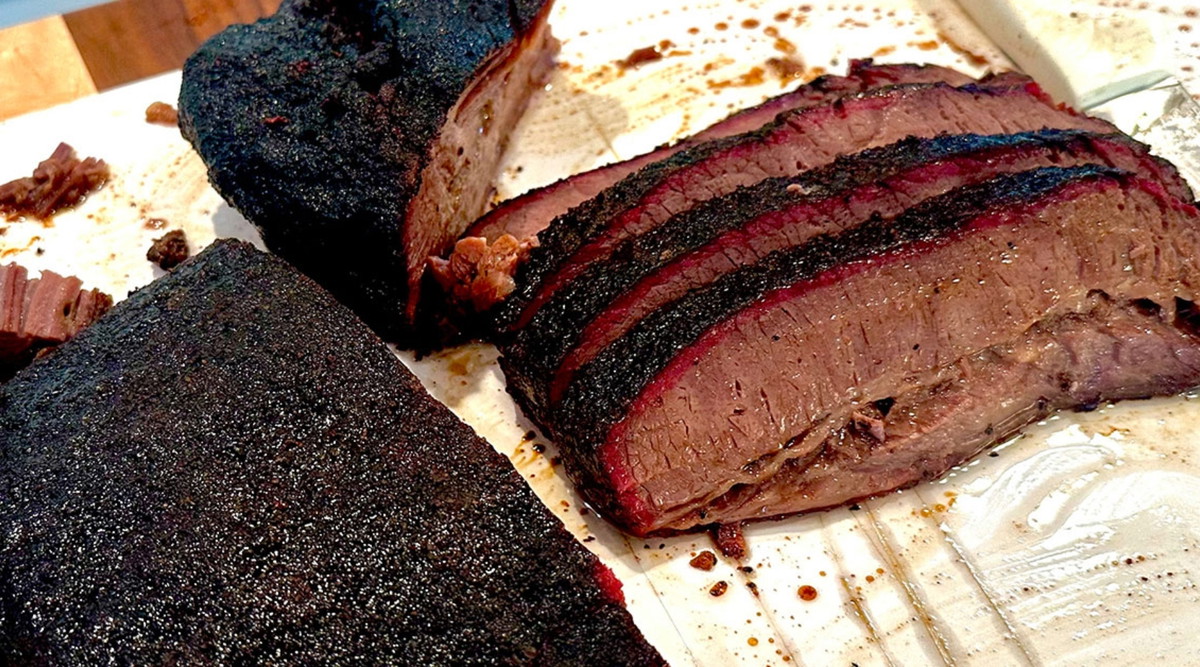
Brisket on the Jambo Pit
8-12
1 hours
8 hours
47
BBQ
Main Dish, Drum Smoker
Competition-influenced brisket smoked all day on Big Poppa's beloved Jambo pit. Semi-competition trim, point separated from flat, Little Louie's Seasoned Salt and heavy black pepper only — no injection. Clean fire at 275°F, apple juice spritz every 30 minutes, foil on the point and butcher paper on the flat at 2.5 hours. Feel the probe to know when it's done. Rest 2 hours before slicing. This is how a pitmaster simplifies a complicated cut down to its essentials.
Ingredients
Australian or domestic brisket (whole packer)
Big Poppa Smokers Little Louie's Seasoned Salt with Garlic Pepper
Coarse black pepper (extra heavy grind)
Apple juice (for spritzing)
Directions
Trim the brisket to approximately 1/4 inch fat cap. Use a piece of trimmed fat under low spots to keep your knife angle consistent. Square edges with scissors. Save all trimmings.
Separate the point from the flat using a flexible knife. Follow the fat seam. Make any mistakes on the point side — not the flat.
Apply an even coat of Little Louie's Seasoned Salt to all sides of both pieces. Add a heavy grind of coarse black pepper. Press seasoning into the sides with the cutting board edge.
Build a clean fire in the Jambo and hold at 275°F. Look for barely visible smoke from the chimney before loading the meat.
Place brisket on the grate with room between pieces. Spritz with apple juice for color as soon as it goes on. Rotate periodically.
Continue spritzing with apple juice every 30 minutes through the first 2 hours.
At approximately 2.5 hours, wrap the point tightly in foil with a splash of apple juice. Wrap the flat in butcher paper. Return both to the Jambo.
Continue cooking until the flat probes tender — the probe should slide in with no resistance, like warm butter. Do not rely on temperature alone.
Remove both pieces and rest unwrapped on a counter for 2 hours before slicing.
Slice the flat against the grain. Cube the point for burnt ends.



Leave a comment
This site is protected by hCaptcha and the hCaptcha Privacy Policy and Terms of Service apply.