



The BEST Method to Cook Brisket | Foil Boat vs Pan Braise
Does anybody feel like a brisket challenge? Big Poppa does. Two prime briskets. Same trim. Same seasoning. Same smoker. But we finish them two different ways — one in a covered pan with au jus, and one in a foil boat. Let’s see what really happens when bark, juice, and technique go head-to-head.
Poppa’s Game Plan
This isn’t just how to cook brisket. This is how to understand brisket. We trim for aerodynamics. We season in layers. We cook low at 225°F so we can sleep like champions. Then we finish two different ways and see which method delivers the best bark, the best juice, and the best slice.
No internet shortcuts. Just real brisket cooked right.
What You’ll Need
Briskets
- 2 whole prime briskets (12–16 lb each)
Seasoning
- Little Louie’s Seasoning
- 16-mesh black pepper
- Big Poppa’s Cash Cow
Foil Boat Finish
- Heavy-duty foil
- Optional: a splash of broth in the foil boat
Pan Braise Finish
- 2/3 cup hot water
- 1 tbsp Miner’s Au Jus base (or quality beef base)
- Full pan + tight foil lid
Tools & Gear
- Smoker (Old Hickory style)
- Thermometer (Thermapen recommended)
- Sharp trimming knife
- Cutting board
Step-by-Step: The Brisket Challenge
1) Trim for Performance
Open the brisket carefully and remove the deckle/hard fat that won’t render. Trim the fat cap to about 1/4 inch (up to 3/8 max). Round sharp edges so airflow moves smoothly over the brisket. Save trimmings for tallow.
2) Season in Layers
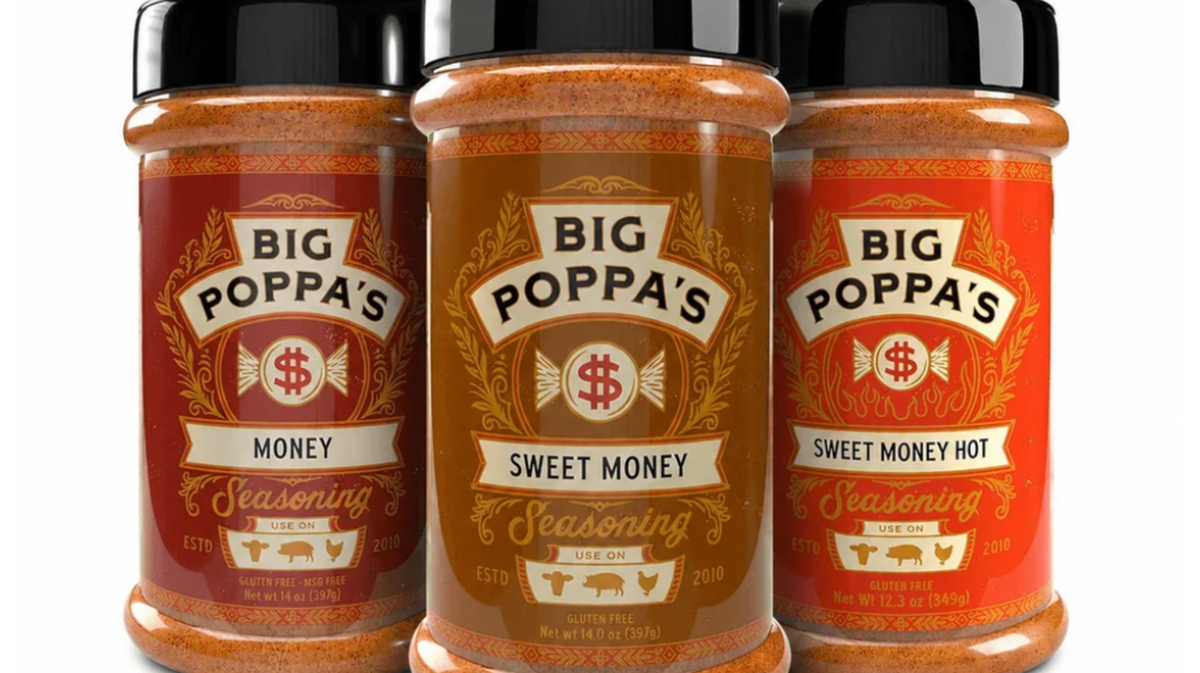
Start with Little Louie’s, then add a layer of 16-mesh black pepper. Finish with Cash Cow. Use the overspray on the sides so nothing goes to waste.
Refrigerate overnight.
3) Smoke Low and Slow
Smoke at 225°F, fat-side up, for about 6–7 hours or until the briskets hit around 170°F internal.
4A) Foil Boat Finish
Build a foil “boat” under the brisket: wrap the bottom and sides tight but leave the top exposed so the bark keeps barking. Return to the smoker until the brisket is probe tender (typically 200–205°F).
4B) Pan Braise Finish
Mix 2/3 cup hot water with 1 tbsp au jus base. Set brisket in a full pan, add the liquid to the bottom, cover tightly with foil, and return to the cooker until the least-cooked section reaches 200°F and probes tender.
5) Rest Like a Pro
Hold briskets in a 165°F warming oven for 1–2 hours before slicing. This is where the magic finishes.
Poppa’s Results
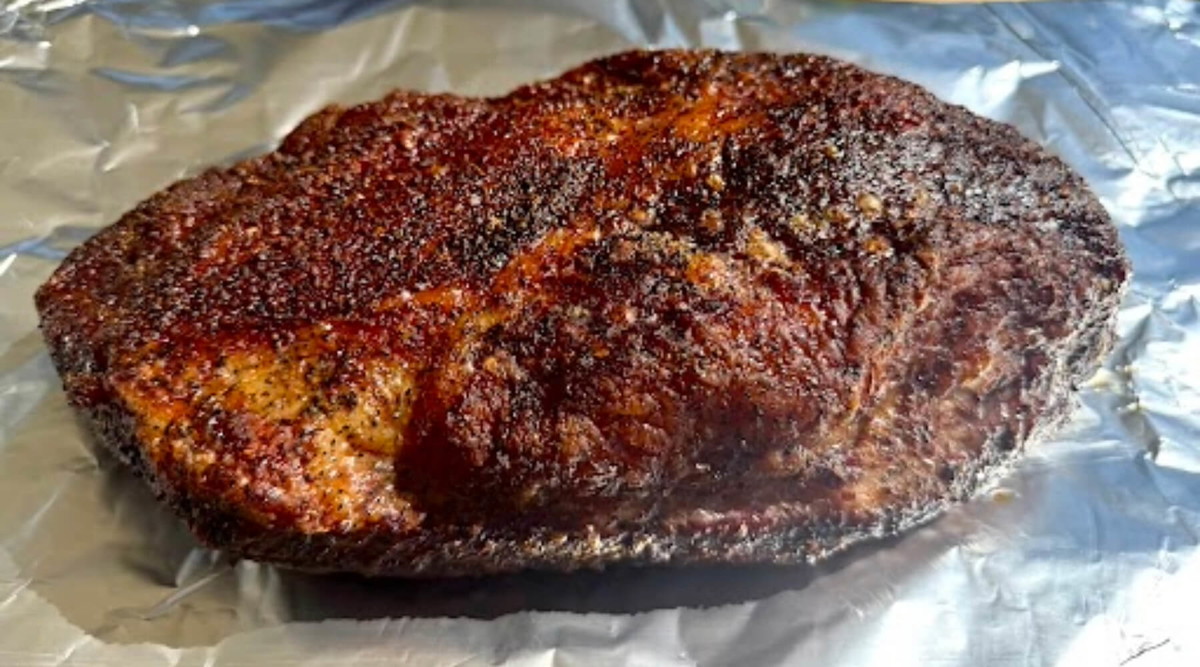
Foil Boat: Killer bark, great structure, shockingly juicy.
Pan Braise: Ultra juicy and forgiving, bark softens a bit but the slice is money.
Different tools. Different results. Both are wins — pick your priority and cook brisket with confidence.
Shop Rubs & Sauces
FAQ
What temp should brisket be done?
Start checking for tenderness around 200°F and cook until it’s probe tender, usually 200–205°F.
Foil boat or pan — which is better?
Foil boat keeps bark stronger. Pan braise gives maximum moisture. Neither is “wrong,” they just win in different ways.
Why cook at 225°F?
Low-and-slow helps fat render and keeps the cook steady, especially for overnight briskets.
How long should I rest brisket?
At least 1 hour, but a 1–2 hour hold at 165°F is the sweet spot.
Can I do this with choice brisket?
Yes, but prime is more forgiving and usually gives better results in both methods.
Watch the Cook
Like this recipe?
If you liked this one, check out Big Poppa's Brisket Smash Burger.
The BEST Method to Cook Brisket (Foil Boat vs Pan Braise)
Big Poppa
12-16
45 minutes
2790
American BBQ
Main Dish, BBQ, Smoked Beef
Two prime briskets, same trim and seasoning, cooked side-by-side to settle a real backyard debate: foil boat vs pan braise. Smoke low at 225°F until the stall, then finish one brisket in a foil boat to protect bark and the other in a covered pan with au jus for maximum moisture. Both methods produce juicy brisket — the foil boat leans bark-forward, the pan finish leans ultra-forgiving. Pick your priority and cook brisket with confidence, Poppa style.
Ingredients
2 whole prime briskets (12–16 lb each)
16-mesh black pepper
Heavy-duty foil (for foil boat)
2/3 cup hot water (for pan method)
1 tbsp Miner’s Au Jus base (or beef base)
Full-size foil pan + foil (for pan method)
Directions
Trim briskets: remove deckle/hard fat, smooth edges, and leave 1/4" fat cap (up to 3/8"). Save trimmings for tallow.
Season: apply Little Louie’s, then 16-mesh black pepper, then Cash Cow. Use overspray on sides.
Refrigerate overnight.
Smoke at 225°F, fat-side up, for 6–7 hours until ~170°F internal.
Foil boat finish: wrap bottom/sides in foil, leave top exposed. Return to smoker until probe tender (200–205°F).
Pan braise finish: mix hot water + au jus base, place brisket in pan, add liquid to bottom, cover tightly. Cook until least-done section hits ~200°F and is probe tender.
Rest: hold at 165°F for 1–2 hours, then slice.

Leave a comment
This site is protected by hCaptcha and the hCaptcha Privacy Policy and Terms of Service apply.